Custom T-shirts with designs specific to a group, cause, or business are a great way to represent yourself or your organization. Screen printing is a popular method used to add custom designs to T-shirts. This tried-and-tested method continues to produce high-quality printed T-shirts, despite the rise of other printing methods. Screen printing is a great way to add a logo or graphic design to a T-shirt, but does it live up to its reputation?
It is safe to say that most people have seen and worn a custom T-shirt. The printing method can affect the final product in different ways, depending on the design and fabric.
Let’s take a closer look at what makes screen printing such a reliable method for printing T-shirts.
What Is Screen Printing?
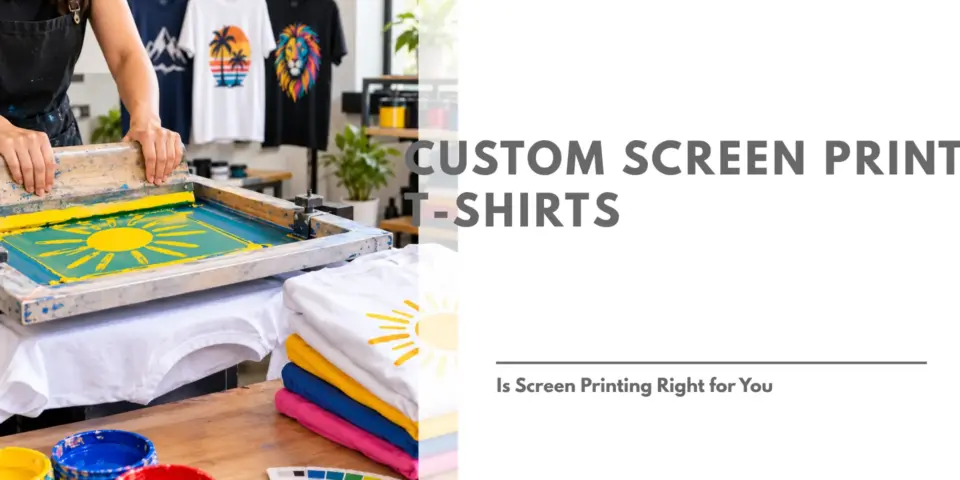
In short, screen printing is a method of printing with a screen. A stencil of your artwork is created on a mesh screen, through which ink is pushed onto the fabric to print the design. The process is repeated for each color in the design. A one-color design needs only one screen, while a multicolor design may require multiple screens. If you want to know more about screen printing and its process, follow our “Everything You Need to Know About Screen Printing” blog.
Once all the desired colors have been printed onto the shirt, the ink is cured using heat. This helps the ink set properly and creates a durable print.
It’s a relatively straightforward process that can produce impressive results. The finished design can have a bold, ink-like appearance. The artwork, screen, ink, fabric, and printing technique must all work together to produce a clean final product.
There are several reasons to choose screen printing over other methods, especially with the popularity of digitally printed custom T-shirts.
But Why Screen Printing?
While other methods may produce finer details and more realistic colors for certain designs, screen printing is known for producing bold, vivid colors that stand out on the fabric. Depending on the ink used, a screen-printed design can also have a distinct feel that many people associate with traditional printed T-shirts.
Screen printing is also a great option when you need multiple copies of the same design.
This method is often used for larger orders because the same screens can be used to print the design on multiple shirts. This makes it a practical choice for school shirts, company apparel, sports teams, concerts, clubs, fundraisers, and many other events and organizations.
Design Is King (Especially for Screen Printing)
Different designs can produce different results depending on the printing method. Screen printing is no exception. Designs that use bold graphics, clear lines, and limited text are often well suited to this method.
More intricate designs and photographs may require additional preparation. Designs with color gradients and multiple colors need careful planning to ensure each part of the design is printed correctly. The size and placement of the graphic also matter. Both small logos and large graphics can work well when the artwork and printing setup are suitable.
Preparing the artwork correctly is an important part of screen printing because it affects how the design is separated into colors and transferred onto the shirt.
Choosing the Right T-Shirt
Cotton T-shirts are a common choice for screen printing because many types of screen printing ink work well on cotton. Cotton blends and other fabrics can also be printed, but the results may vary depending on the material and ink used.
The shirt color is another factor to consider. A design printed on a black shirt may look different from the same design printed on a white shirt. Printing on dark fabrics may require an underbase or other adjustments to help lighter colors stand out.
Choosing the right fabric and shirt color helps ensure that the final design looks the way you expect.
Quantity Can Affect the Process
Screen printing requires preparation before the actual printing begins. Screens must be prepared, and the printing equipment needs to be set up. These steps create initial costs, but printing more shirts with the same design can spread those costs across the order.
This is why screen printing is often a practical choice for bulk orders. For example, an organization may need shirts for every employee, or a sports team may need matching shirts for all its players. As the order quantity increases, the average cost per shirt can decrease.
Screen printing can also be used for small orders, including one or two shirts. However, the setup costs may make other printing methods more affordable for very small quantities.
Screen Printing and Other Methods
The printing method you choose to go with can have a huge impact on how your t-shirt turns out. This is why, when selecting a method, it is essential to take into account the design, fabric, color of the shirt, and how many t-shirts need to be printed.
Screen printing is typically great for larger orders as well as more minimalistic designs. DTG stands for direct-to-garment and involves printing straight onto the fabric, which makes it ideal for intricate, colorful designs. DTF stands for direct-to-film and involves using a special film to transfer the image onto the garment. This method is also great for intricate, multicolored designs and can be used on a variety of fabrics.
By looking at the design, quantity, and desired outcome, one should have a good idea of which method is best for their order.
Keeping Your Printed Shirts Looking Good
Proper care may help extend the life of your printed T-shirt. The durability of the design is often dependent on such factors as the ink, fabric type, curing method, and washing instructions.
Always follow the washing and care instructions on the garment. Turning the T-shirt inside-out when washing may help prolong the life of the design. Avoid ironing over the printed graphic. And be sure to follow the recommended drying instructions to ensure that the graphic retains its good looks for a long time.
Bottom Line
The custom screen-printed T-shirt can represent your group, company, favorite band, or personal interests. The customization of garments offers a wide range of design variations from simple logo T-shirts to more elaborate graphic prints.
The final appearance of a printed T-shirt depends on many factors, such as the design, fabric, ink, colors, printing method, order size, and others. A particular printing method is not always suitable for all T-shirts, so it is essential to consider various criteria when choosing a custom garment.
Moreover, learning about the critical factors that affect the printing process can be helpful for the client to get the most suitable T-shirt. Thus, after selecting the appropriate method, the customer will be able to obtain a high-quality and comfortable garment made according to their design and personal specifications.